Industries
Max. energy
Type of test
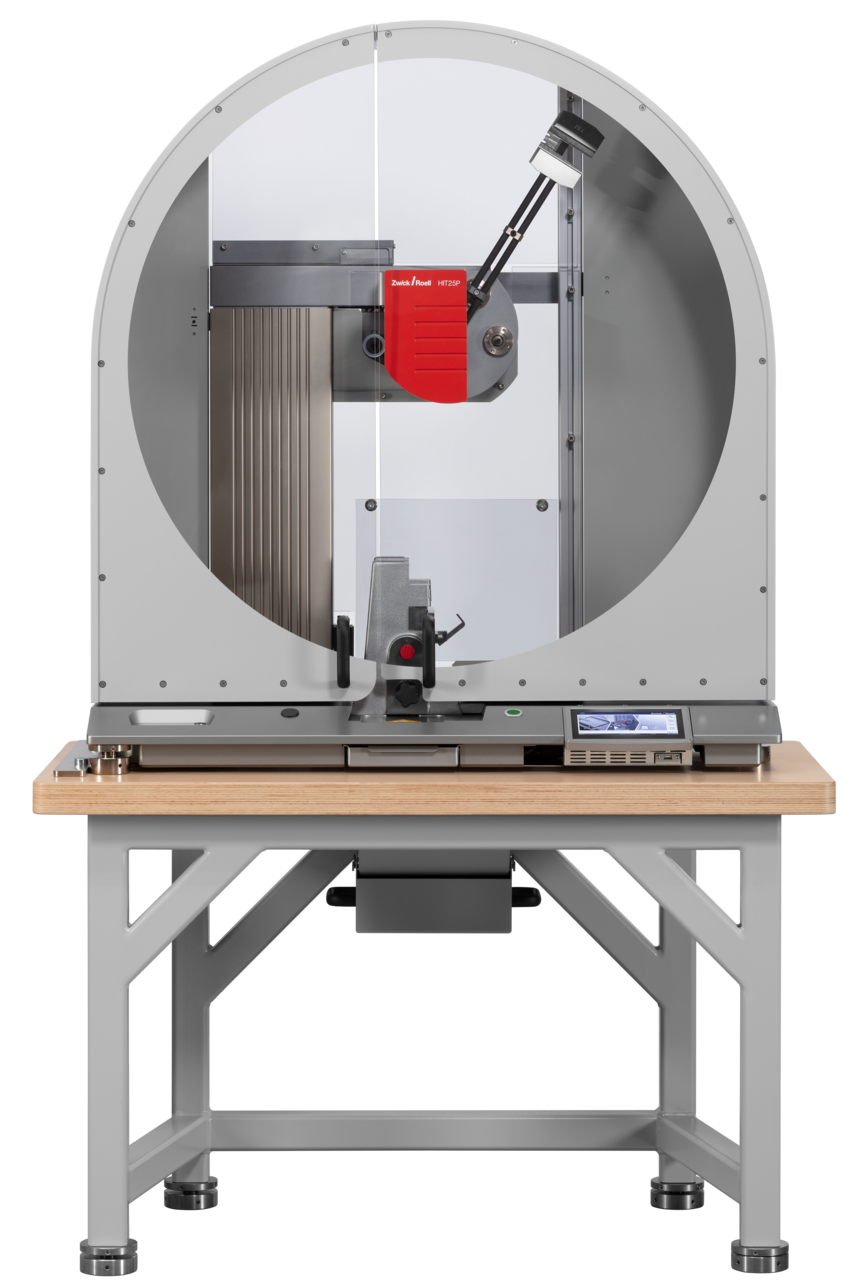
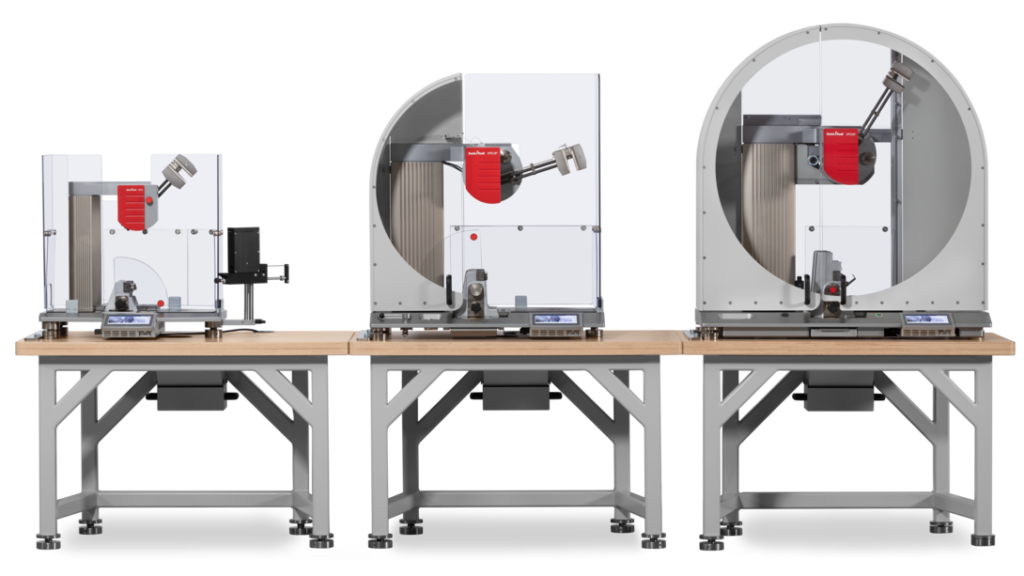
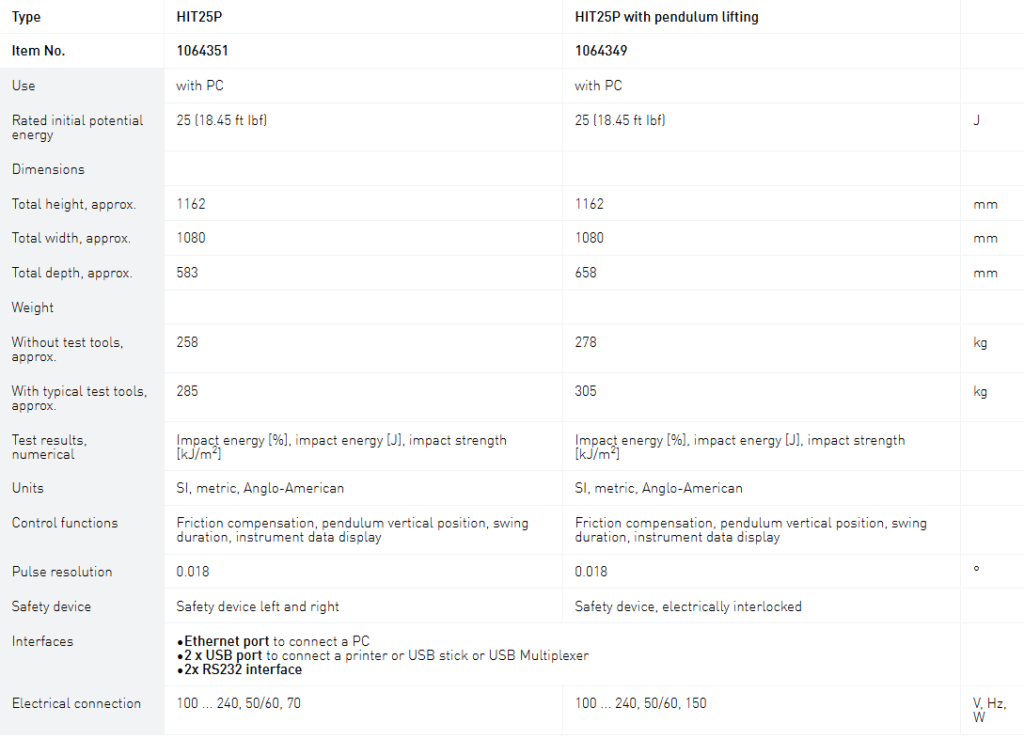
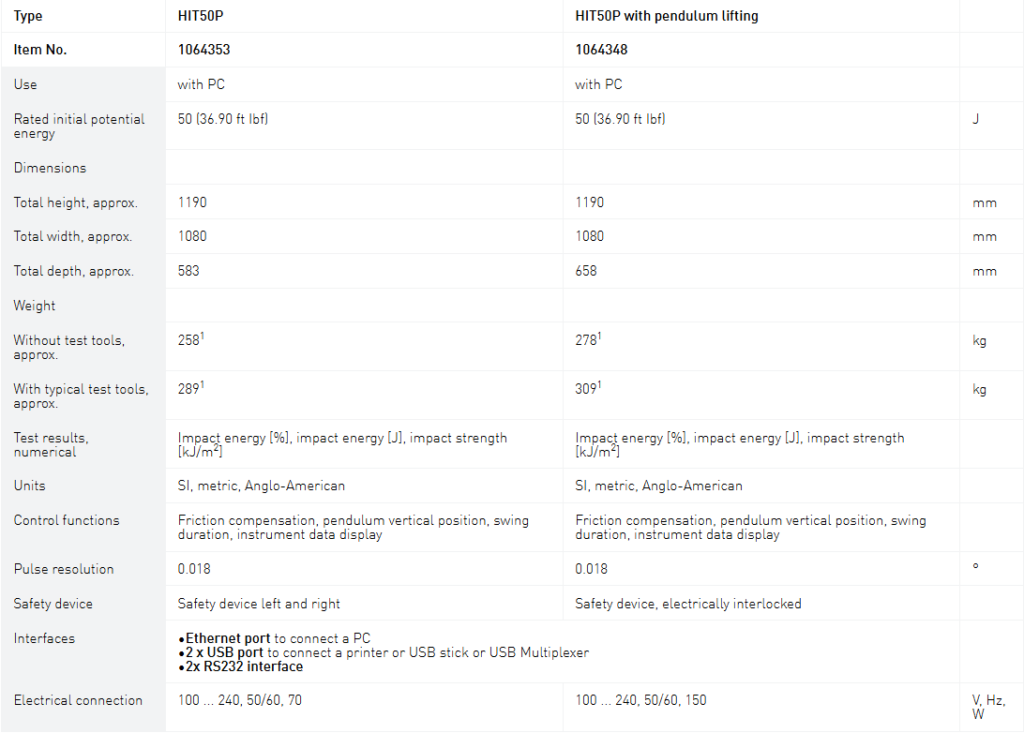
In addition to tensile and flexure tests, Charpy impact tests are the most frequently performed mechanical tests in the polymer industry. ZwickRoell’s HIT series pendulum impact testers offer a high-precision, cost effective solution.

The consistent design of a pendulum impact tester for low natural vibrations starts near the specimen with the pendulums and fixtures.
ZwickRoell uses high-performance carbon materials for our HIT pendulums. They offer the following advantages:
Significantly greater pendulum stiffness
Ideal distribution of mass
Repeatable, reproducible test results.
You can test in a measurement range up to 80% of potential energy. This is made possible by the very high ratio of instrument mass to pendulum mass.
Changing between the various HIT fixtures is quick, while precision guides guarantee a continuous positive-fit to the baseplate.
Operator convenience is a prominent feature of the HIT pendulum impact testing systems. Everything is within an arm's reach and operational controls are at a uniform height.
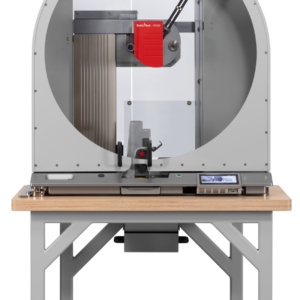
The welded table frame guarantees maximum stiffness, while wide-based leveling feet ensure firm, stable support. The support table’s positioning stops line up perfectly with the pendulum impact tester's frame. The HIT pendulum impact tester base plate is constructed with vibration-damping metal casting, and the ratio of its mass to the pendulum mass complies with standard requirements. Three sturdy, lockable leveling-feet provide secure footing and enable horizontal alignment of the instrument. This means that you can be sure of obtaining reliable test results regardless of local conditions.
Just as the mass of a calibrated weight is engraved on it, each ZwickRoell pendulum carries its data with it in the form of electronically readable pendulum coding.
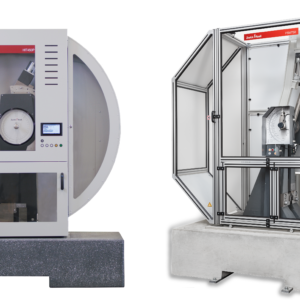
To protect operators from flying specimen fragments or prevent contact with a falling pendulum ZwickRoell recommends a range of solutions:ZwickRoell testing software provides a clear visual presentation of all impact characteristics recorded in a results table and graph, allowing you to produce comprehensive statistical evaluations.
Data is easily and safely stored:
Instrumented impact testing allows additional information on material characteristic values and properties to be obtained, and fracture mechanics investigations and automated fracture evaluations to be performed. Instrumented pendulums and expanded electronics are available for high-accuracy recording of the high-speed processes involved in breaking through a specimen.
Impact strength is a critical characteristic of the material used at low temperatures. ZwickRoell offers a temperature-conditioning box and magazine for cooling specimens. For testing at low temperatures the specimens are first conditioned in a cooling box. The magazine with the specimens is then attached to the specimen feeder, which is fastened to the HIT pendulum impact tester. This way the specimens can be quickly and conveniently removed and tested.
Specimens can be loaded in variety of ways by pendulum impact testers.
Charpy tests: ISO 179, ASTM D6110
Izod tests: ISO 180, ASTM D256, ASTM D4812
Tensile impact tests: ISO 8256 Methods A and B, ASTM D1822
Dynstat bending impact tests: DIN 53435

Charpy fixtures consist of a heavy cast base. Test-specific accessories, such as supports and anvils, are selected according to the specimen range.
The anvils used, which have a surface finish and radius that can significantly affect the accuracy of the test results, are precision CNC machined and are 100% dimensionally accurate. ZwickRoell does not supply single-part anvils, for which it is difficult to achieve dimensional accuracy. During installation, the location of the anvil relative to the upper anvil is ensured via an optional jig.
As anvils are subject to greater wear than supports, cost-effective replacement of two-part anvils independently of other accessories is available. Quick-change adapter plates ensure that the impact point is matched to the specimen width in the impact direction, while the specimen thickness (vertical direction) is accommodated via suitably dimensioned supports with alignment pins to ensure accurate insertion.
An optional swiveling protective shield can be used with the fixture, and a positioning aid helps to locate the specimen correctly, using either the notch or the front edge of the specimen.
Advantages:

Two types of impact fixtures can be used: The manual fixture clamps the specimen via a fine-threaded lead screw, This allows clamp-sensitive, soft and hard samples to be clamped sensitively.
The pneumatic fixture is ideal where high throughput is required or temperature-conditioned specimens are to be tested. It also enables excellent reproducibility when clamping-sensitive materials are being tested.
Quick clamping via a switch on the fixture itself minimizes the time from removal of the specimen from the temperature-controlled area to actual testing.
Both fixtures are equipped with a centering unit, which ensures that the specimen is always positioned at notch root level.
Adjustment to suit specimen width in the impact direction is via quick-change inserts with lateral guides.
Advantages:

For tensile impact tests the specimen and yoke are aligned in a jig and clamped together.
Depending on the test method in use, the specimen plus yoke are clamped in either the pendulum or the tensile impact fixture.
The appropriate templates are used to set up for the various ISO and ASTM specimen types.
For tests to ISO 8256, Method A, a yoke is attached to the shoulder at one end of the specimen. The other end of the specimen is gripped in the tensile impact fixture. The free end of the specimen plus the yoke is struck off by the pendulum hammer. Yokes are available with masses from 15g to 120g.
For tests to ISO 8256 Method B and ASTM D1822 one end of the specimen is clamped in a specially designed pendulum hammer; a yoke is attached to the other end, which hangs free. In the test the yoke is stopped by the tensile impact fixture, while the pendulum plus specimen continues its travel.
A tensile impact fixture is available for each standard. Yokes are available from 15g to 120 g.
Advantages:
HIT pendulum impact testers can also be equipped for Dynstat impact tests according to DIN 53435. A Dynstat fixture and the five standardized pendulums cover the range of applications.Standard-compliant testing according to Charpy, Dynstat, and Izod and tensile impact tests, Method A/B with the HIT series of pendulum impact testers—be sure to hit your target with ZwickRoell!
Etiam magna arcu, ullamcorper ut pulvinar et, ornare sit amet ligula. Aliquam vitae bibendum lorem. Cras id dui lectus. Pellentesque nec felis tristique urna lacinia sollicitudin ac ac ex. Maecenas mattis faucibus condimentum. Curabitur imperdiet felis at est posuere bibendum. Sed quis nulla tellus.
178/57 พุทธมณฑลสาย2 ซอย33 แขวงศาลาธรรมสพน์ เขตทวีวัฒนา กรุงเทพฯ 10170 ประเทศไทย
+66 (0) 2 024 8471
+66 (0) 81 420 1638
Sales@scsinstruments.co.th
Service@scsinstruments.co.th